
Fire-Rated Roller Shutters vs Fire Doors: What London Warehouses and Factories Need to Consider

If you are comparing fire rated roller shutters London businesses install against fire doors, the right answer depends on far more than cost. For warehouses, factories and loading bays, the best option comes down to the size of the opening, how the space is used, the movement of people and vehicles, and the wider fire strategy for the building.
That is why this should never be treated as a simple product swap. A large internal opening between warehouse zones has very different demands from a staff corridor, plant room entrance or pedestrian escape route. Choosing correctly can help protect operations, support safety planning and reduce avoidable disruption later.
At Action Shutters Ltd, we support industrial sites across London and the South East from our Woolwich base. We specialise in industrial roller shutters and heavy-duty security systems, including fire-rated systems, with all work carried out by our own experienced engineers. We also offer a 12-month guarantee on all products, annual maintenance contracts and a 24/7 emergency repair service.
Why this decision matters on industrial sites
In a warehouse or factory, doors do much more than open and close. They affect access, workflow, stock protection and the way different parts of the building are separated.
A poor choice can create problems such as:
Unnecessary obstruction at busy access points
Delays to goods movement or vehicle routes
Security weaknesses at vulnerable openings
Higher wear from using the wrong product for the traffic level
Extra cost when a system needs to be changed later
For that reason, the best question is not, “Which is better?” It is, “Which product is right for this specific opening?”
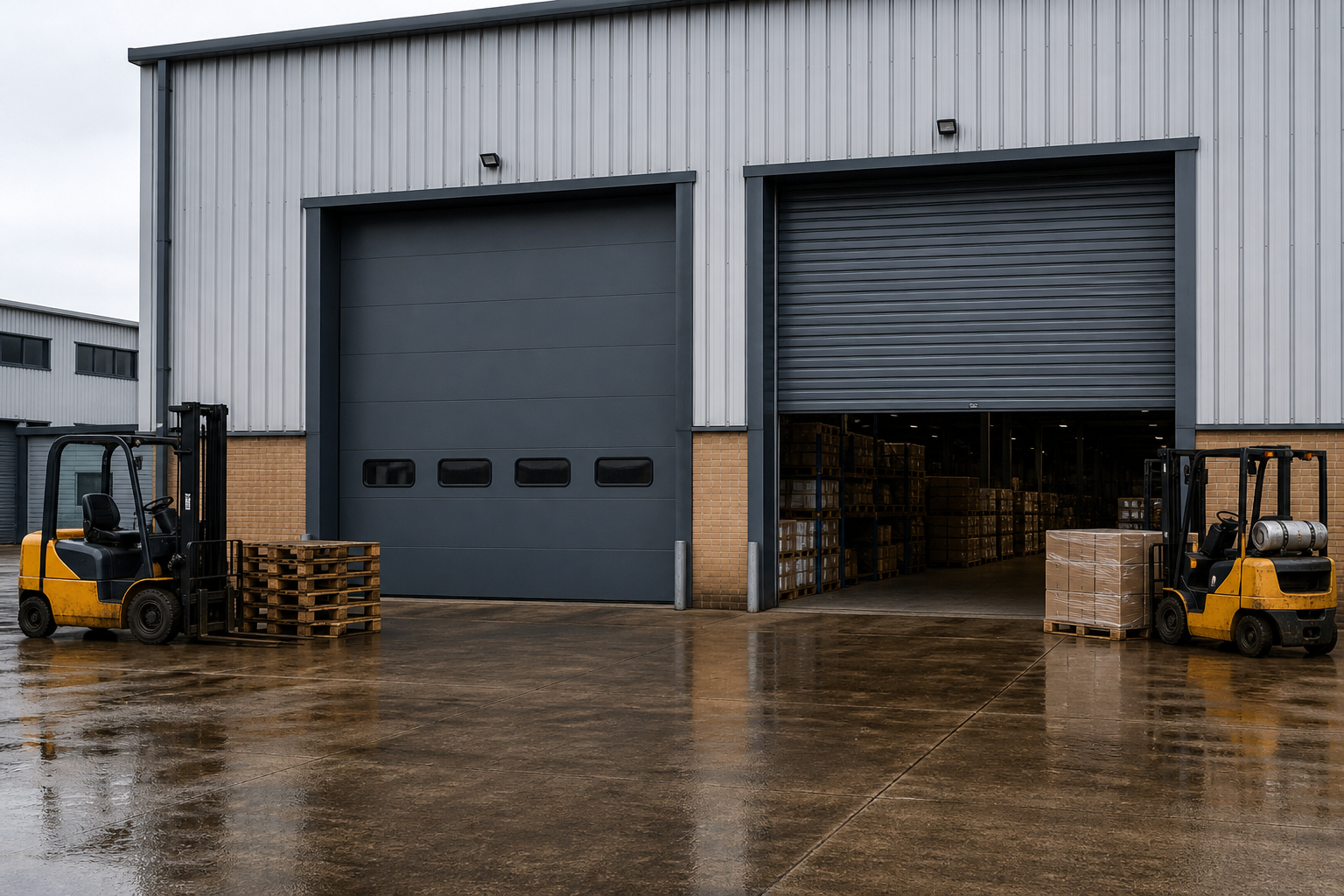
Fire rated roller shutters London warehouses choose for large openings
A fire-rated roller shutter is usually considered where a larger opening needs protection without permanently blocking operational access. In industrial buildings, this can be relevant where goods, equipment or vehicles need to pass through spaces that still require appropriate fire separation.
Where a fire-rated roller shutter can make sense
Openings between warehouse zones
Wider access points within factories or production areas
Goods transfer routes between operational spaces
Areas where security and fire protection both matter
Key advantages of a fire-rated roller shutter
It can suit wider openings that a typical pedestrian fire door would not cover.
It stores vertically, which can be practical where floor space is valuable.
It can fit well within robust industrial environments.
It may help combine day-to-day access needs with fire protection objectives when correctly specified.
This is one reason many industrial clients searching for fire rated roller shutters London are not simply looking for a door. They are looking for a workable solution for a real operational opening.
However, a fire-rated roller shutter is not automatically the best answer everywhere. If the opening is mainly for people on foot rather than goods movement, a fire door may be the better fit.
When a fire door is the better choice
Fire doors are generally more suitable for pedestrian openings, staff routes and smaller access points. In many warehouse and factory settings, they are the practical option where people need regular manual access through a defined doorway.
Common uses for fire doors on industrial sites
Staff corridors and pedestrian routes
Plant rooms and service spaces
Internal doors between offices and warehouse areas
Smaller access points where goods traffic is limited
Key advantages of a fire door
It is usually the more practical choice for day-to-day pedestrian movement.
It can be easier to integrate at standard doorway sizes.
It provides a clear solution where a full shutter system would be unnecessary.
It can support the building layout without adding industrial hardware where it is not needed.
For many sites, the question is not whether a fire door is better than a shutter. It is whether the opening is actually a door-sized pedestrian route or a larger operational gap.
Why many buildings need both, not one or the other
One of the most common mistakes we see is treating this as a straight choice between two competing products. In reality, warehouses and factories often need both systems in different parts of the building.
For example:
A large opening between storage areas may be better suited to a fire-rated roller shutter.
A staff corridor leading to offices or welfare areas may need a fire door.
A goods transfer route may call for a shutter, while adjacent pedestrian access is served by a separate door.
When each opening is matched to its function, the result is usually better for operations, easier for staff to use and more sensible from a long-term maintenance point of view.
What London warehouses and factories need to consider before choosing
1. The size of the opening
This is often the starting point. A large industrial opening used for pallets, cages, machinery or regular goods movement is a different challenge from a normal doorway. The wider and more operational the opening, the more likely a roller shutter becomes part of the conversation.
2. How the opening is used every day
Ask simple but important questions:
Is the opening mainly for people, goods or both?
How often is it used in a normal day?
Does it need to stay clear for equipment or vehicle access?
Would a standard swing door be practical in that location?
Products that work well on paper can be frustrating in live industrial environments if daily use has not been thought through properly.
3. The building's fire strategy
Any final decision should fit the building's fire strategy, risk assessment and product certification requirements. Fire protection products should always be specified for the correct application and installed in line with manufacturer guidance.
This is particularly important on larger commercial sites, where compartmentation and access cannot be considered in isolation. The right product in the wrong position can still create operational or planning problems.
4. Security as well as fire protection
Many industrial premises are thinking about more than fire separation alone. Stock, equipment and access control matter as well. At larger openings, a fire-rated shutter may be attractive because security remains an important day-to-day concern, especially on busy warehouse and factory sites.
If you need broader support with robust site protection, our industrial roller shutter and security services are designed around commercial and industrial environments.
5. Maintenance and reliability
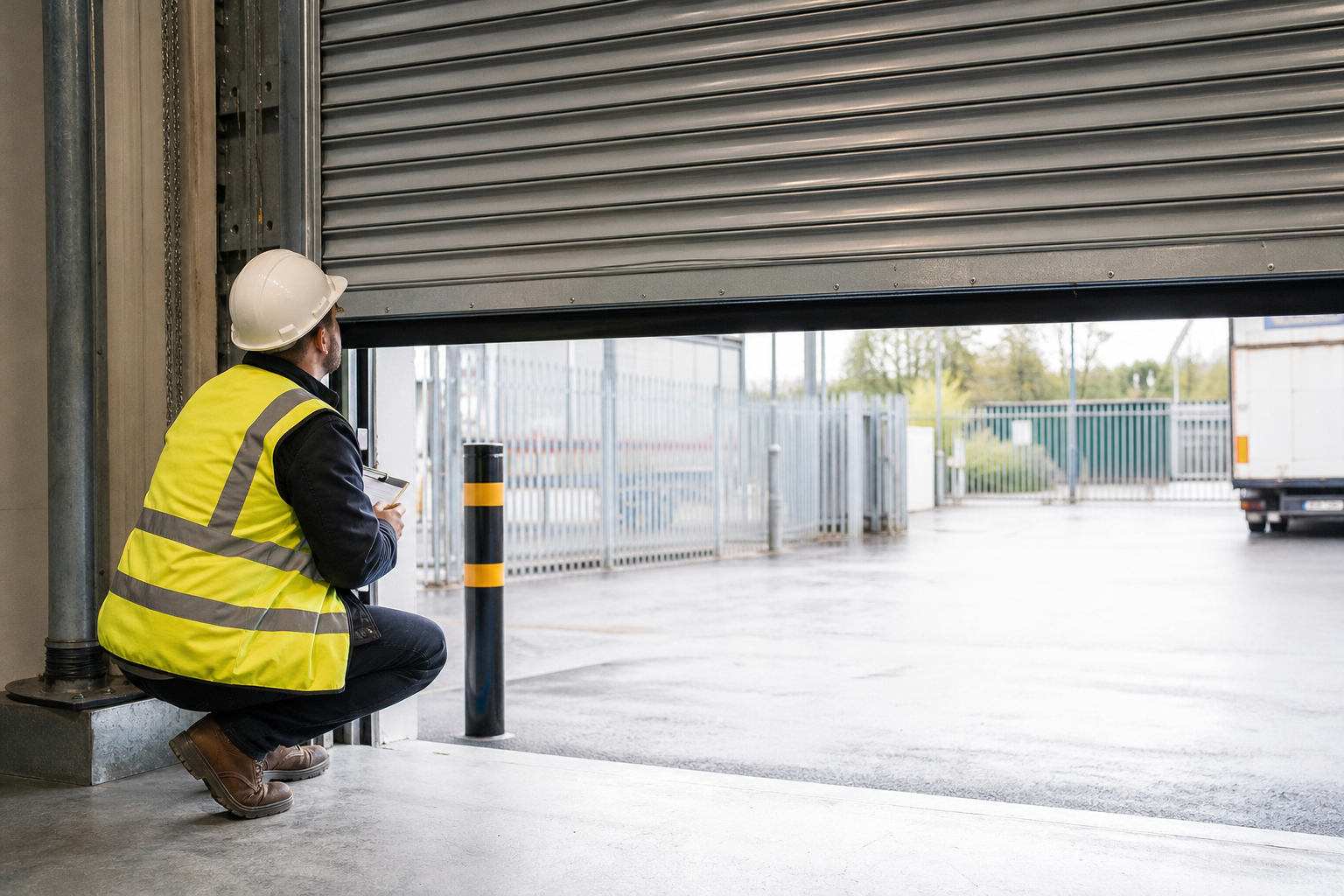
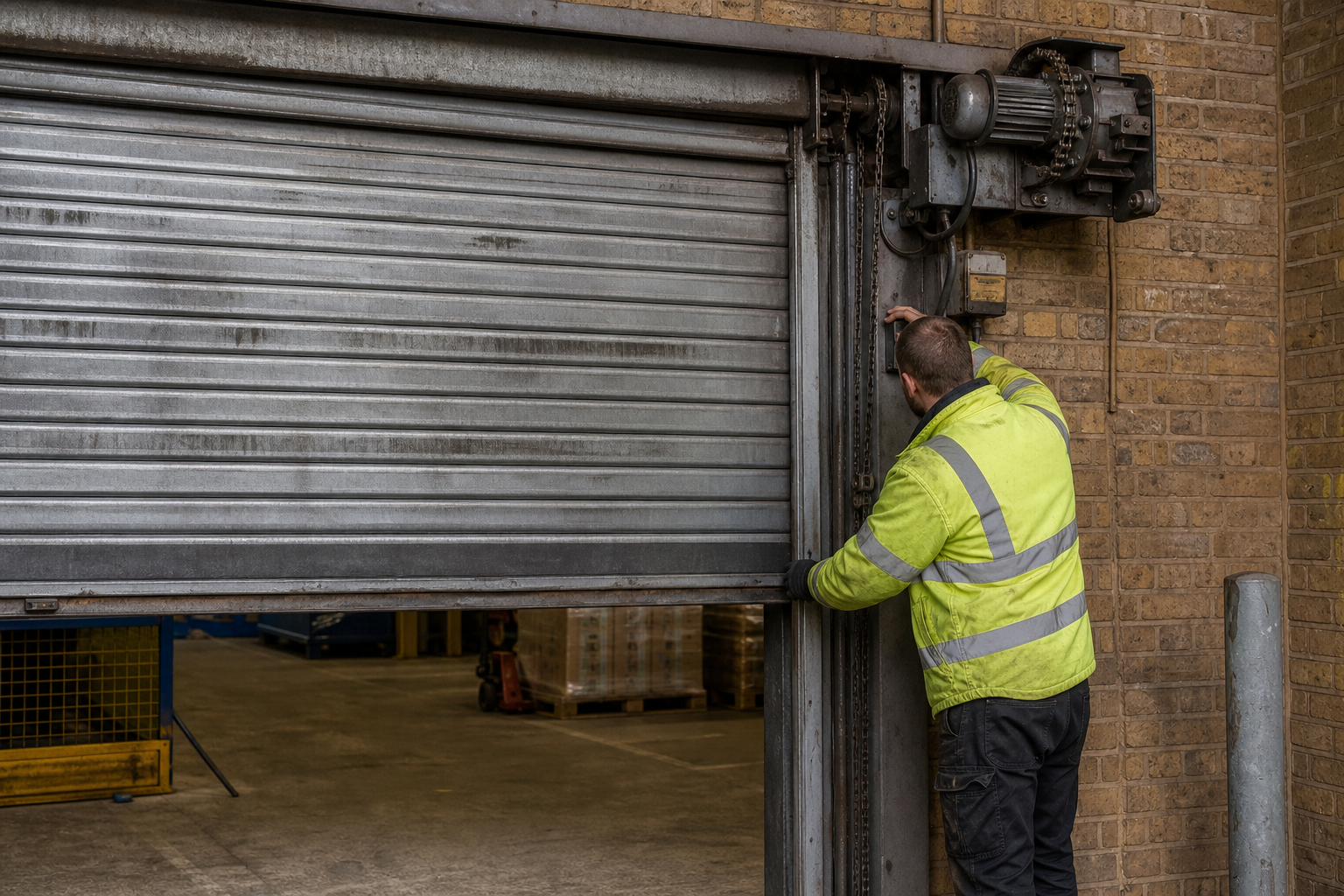
Whichever system you choose, maintenance should be part of the discussion from the start. Industrial access products work hard, and reliability matters. A system that is rarely checked can become a problem at exactly the wrong time.
Regular servicing helps identify wear, damage, closing issues and operating faults earlier. For busy premises, planned maintenance is often the most practical way to reduce unplanned downtime and keep equipment in dependable condition.
6. The cost of getting it wrong
The cheapest upfront option is not always the lowest-cost decision over time. If a door slows down operations, causes access frustration or needs to be replaced because the opening was misunderstood, the real cost quickly rises.
A site-specific recommendation is usually far better value than a one-size-fits-all approach.
Common mistakes to avoid
Choosing purely on upfront price
Price matters, but so do traffic levels, opening size and practical use. A lower initial cost can lead to higher long-term disruption if the product is wrong for the space.
Assuming one product can do every job
Large industrial openings and standard pedestrian routes have different demands. Trying to use a single solution across every opening often creates compromises.
Overlooking day-to-day workflow
A product may look suitable in specification notes but still be inconvenient for staff, deliveries or equipment movement. Practical use should always be part of the decision.
Ignoring future servicing needs
Maintenance is not an afterthought. On busy sites, it is part of keeping access systems reliable and reducing the risk of avoidable faults.
Delaying expert advice
The longer uncertainty continues, the more likely it is that the wrong assumption is built into the project. Early input can save time, money and disruption later.
How we help industrial sites make the right choice
At Action Shutters Ltd, we focus on practical recommendations rather than forcing one product into every opening. We look at how the building works, what kind of traffic the opening handles and what the site needs from both a fire and security perspective.
Businesses choose us because we offer:
Specialist experience with industrial roller shutters and heavy-duty security systems
Support for warehouses, factories and loading bays
Fire-rated system expertise
Work carried out by our own experienced engineers
A 12-month guarantee on all products
Annual maintenance contracts and 24/7 emergency repair support
From our Woolwich base, we support clients across London and the South East with solutions built around real operating conditions, not generic assumptions.
Arrange a site visit to discuss the right solution
If you are weighing up a fire-rated roller shutter against a fire door, the best next step is a site visit. That allows the opening, traffic pattern, security demands and practical use of the area to be assessed properly before a recommendation is made.
Arrange a site visit with Action Shutters Ltd to discuss the right fire-rated shutter or fire door solution for your London warehouse or factory.
FAQs
Are fire-rated roller shutters better than fire doors?
Not in every case. Fire-rated roller shutters are often better suited to larger operational openings, while fire doors are usually the more practical option for pedestrian routes and smaller access points. Many sites need both.
Do warehouses in London need fire-rated roller shutters or fire doors?
That depends on the opening size, how the space is used, the level of traffic, the need for security and the building's fire strategy. A site-specific assessment is the best way to decide.
Can a fire-rated roller shutter also support security?
At larger industrial openings, it can be a sensible option where security matters in day-to-day operation as well as fire protection. The right product still needs to be chosen for the correct application.
How often should fire-rated shutters and fire doors be maintained?
Maintenance needs vary according to the product, environment and usage level. On busy warehouse and factory sites, planned servicing is important to keep systems reliable and to identify problems early.
Can Action Shutters Ltd help with repairs as well as new installations?
Yes. We offer support with installation, annual maintenance contracts and a 24/7 emergency repair service for industrial sites across London and the South East.
Conclusion
Choosing between a fire-rated roller shutter and a fire door is really about choosing the right protection for the right opening. Large operational gaps, staff routes, security priorities and daily traffic all need to be considered together.
If you need practical advice on fire rated roller shutters London warehouses and factories can rely on, we are here to help. Get in touch with Action Shutters Ltd to arrange a site visit and discuss the most suitable option for your building.
Comments